Best Electric Scooter for Commuting to Work
How to choose an electric scooter for a daily commute: real range, weight for carrying, rain ratings, locks, charging safety and four adult models from our list.
At a glance
For most adult commuters, the Segway Max G3 Plus is the pick, with a 717 Wh battery and about 56 lb of weight. The Segway Max G2 is the mid-range value choice, and the NIU KQi Air suits riders who must carry a scooter, at about 26 lb.
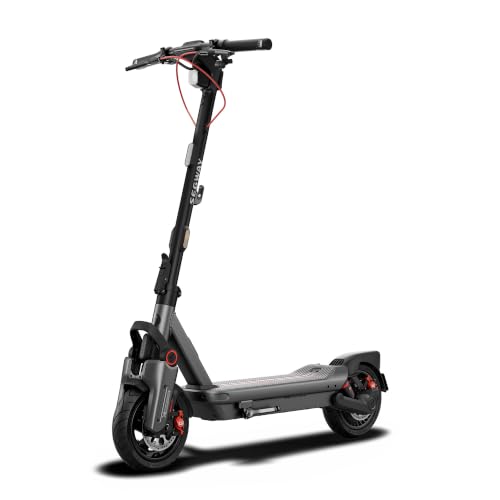


A scooter that is fun on a Saturday can be a poor fit for a Tuesday commute. The commute asks different questions: Can it cover your round trip when the weather is bad? Can you get it through the office door? Will it still be there when you come out of the meeting? This guide walks through those questions in the order most riders hit them, then matches four models from our list to four different commutes.
We did not ride any of these scooters. Our picks come from comparing the specifications each maker publishes on its own product page, and we say so when the maker’s figure differs from the Amazon listing title. For the full lineup, see our electric scooter comparison.
Start With Your Route, Not the Spec Sheet
Write down four numbers before you look at any product: your one-way distance, the speed you will realistically ride, how many hills you cross, and what happens to the scooter during your workday. Those four numbers decide almost everything else.
If your commute is under about 3 miles each way on flat streets, almost any scooter on our list can do it. If it is 8 to 12 miles each way, range, tire quality and suspension start to matter. If you carry the scooter up a flight of stairs at either end, weight matters more than any other number on the page.
Range: How to Cut the Maker’s Claim Down to Size
Every maker publishes a best-case range, and every maker attaches conditions. Segway’s footnotes for the Max G3 Plus describe a 165 lb rider, about 77°F and flat pavement. The headline figure also depends on the mode. For the Max G3 Plus, Segway lists about 56 miles in ECO at roughly 9.3 mph, about 36 miles in DRIVE, about 28 miles in SPORT and about 22 miles in SPORT+ at 28 mph. A commuter who rides at 15 to 20 mph is not in the 56-mile row.
Use this method instead:
- Find the range the maker lists for the speed or mode you will actually ride.
- Multiply by about 0.5 so that your round trip uses half of it. That margin covers a heavier rider, a backpack, hills, headwinds, stop-and-go riding and battery aging.
- Subtract more if your trip crosses hills or if you ride in cold weather, since the makers’ conditions are mild-weather conditions and cold is outside what they describe.
The NIU KQi Air is listed at 31 miles, but NIU does not state the test conditions on its product page, so treat that number with extra caution. The Hiboy S2 Max is listed at up to 40 miles “under optimal riding conditions,” which is the maker’s own wording for a best case.
Charging time belongs in the same calculation. Segway lists a built-in charger and about 4 hours for the Max G3 Plus, about 5 hours for the Max G2 and about 3.5 hours for the Max G3. NIU lists 5 hours for the KQi Air and Hiboy lists 6 to 7 hours for the S2 Max. If you can charge only overnight at home, all of these work. If you plan to top up at the office, check the next section first.
Weight, Folding and Where It Lives During the Day
Weight is often the biggest factor in a commute. Segway lists the Max G3 Plus at about 56 lb and the Max G2 at about 53.5 lb. The Hiboy S2 Max is listed at 40 lb. The NIU KQi Air, with its carbon-fiber frame, is listed at 26.2 lb with the battery and folds to about 18.9 inches tall. Those are very different loads when you reach the third-floor landing.
Think about three storage cases:
- Ground-level storage at both ends. A garage, bike room or ground-floor office lets you pick on range and ride quality. A 50 to 56 lb scooter is fine if you only roll it.
- Stairs at one end. Choose the lightest scooter that covers your round trip with margin. Remember that a longer-range battery adds weight.
- Transit. Many transit agencies set their own rules for scooters, and lithium-ion batteries draw extra attention. Read the agency’s current policy before buying, and do not assume a folding scooter is allowed.
If your office has no place for the scooter, ask your building manager before you commit. A scooter parked under your desk is a different conversation from one in a lobby.
Rain, Dust and What an IP Rating Tells You
An IP rating is a two-digit code for protection against dust and water. When the first digit is an X, the maker has not rated dust protection. The second digit describes water, and higher is better. The ratings on our list are:
| Scooter | Rating listed by the maker |
|---|---|
| Segway Max G3 Plus | IPX6 body |
| Segway Max G2 | IPX5 |
| NIU KQi Air | IP55 |
| Hiboy S2 Max | IPX4 |
These ratings describe resistance to splashes and spray under lab conditions. They are not permission to ride through standing water, and they do not make braking on wet pavement any shorter. Self-sealing tubeless tires, which Segway lists on the Max G3 Plus, Max G3 and Max G2, are a practical help against slow leaks, but a rainy commute still calls for lower speed and more space to stop. Read the maker’s manual for what it says about wet riding and about washing the scooter, since many manuals warn against pointing a hose at it.
Lights, Signals and Brakes You Will Use Every Day
For a commute, the visibility features matter as much as the motor. Segway lists turn signals and a brake light on the Max G3 Plus, and turn signals front and rear on the Max G2. NIU lists turn signals on the KQi Air. Check whether the scooter has a headlight bright enough for unlit streets, and add a rear light if your state requires one for night riding.
Brakes differ more than shoppers expect. Segway lists front and rear double-action piston disc brakes plus a rear electronic brake on the Max G3 Plus. NIU lists a mechanical disc brake plus regenerative braking on the KQi Air. Disc brakes need occasional adjustment and pad replacement, so look at whether the maker publishes maintenance guidance.
Locks, Theft and Tracking
A scooter is easy to carry off, so lock it every time, even for a few minutes. Use a hardened U-lock or chain through the frame and a fixed rack when you can, and bring the scooter inside when the building allows it. Some scooters add electronic deterrents. Segway lists Apple Find My support and its AirLock feature on the Max G3 Plus, and NIU lists NFC and Bluetooth unlock with automatic locking on the KQi Air. Those features can help you find or disable a scooter, but they do not replace a physical lock, and none of them stops someone from lifting a light scooter into a vehicle.
Charging Safety
All of these scooters use lithium-ion batteries, and fire safety guidance is consistent. Cornell’s environmental health and safety office advises using the original charger and cord, not charging while you sleep or leave the device unattended, and storing it where it does not block your exit. It also tells readers to look for a safety standard from a nationally recognized laboratory, especially UL 2272 for personal e-mobility devices.
Read certification claims carefully. Segway states that the Max G3, Max G2 and E2 Plus are certified by TÜV Rheinland to the UL 2272 standard, and NIU’s page says the KQi Air is “UL 2272 Certified.” Segway’s own page text for the Max G3 Plus does not state a certification, even though the Amazon title does, so ask the seller for documentation if that matters to your building. Hiboy’s site header mentions UL 2849 and UL 2272, but the S2 Max product block does not state a certification for that model. Some cities, such as New York, have their own rules for what may be sold, so check local requirements.
If your employer or building bans charging indoors, plan to charge at home and ride within the range margin above.
Know Your Local Rules
There is no single federal e-scooter law. Speed limits, minimum rider age, helmet requirements and where you may ride, whether roads, bike lanes or sidewalks, vary by state, city and sometimes by campus or business park. Look up your state first, then your city, because the city rule can be stricter. Speed is a good example. Segway lists the Max G3 Plus at about 28 mph at full battery and says riders should keep within local limits. If your city caps scooters at 15 or 20 mph, you are paying for a speed you cannot legally use, and a scooter with a lower top speed may be the better fit. Insurance, registration and helmet rules also differ, so check them before your first ride.
Our Picks for Four Commutes
Segway Max G3 Plus: Longer Commutes
Segway lists a 717 Wh battery, 11-inch self-sealing tires, hydraulic suspension at both ends and a 286 lb maximum load. At about 56 lb it suits riders with ground-level storage and a longer route.
This is our first choice for adults with a longer commute and a place to roll the scooter indoors. The range per mode, the suspension and the IPX6 body rating address the three things that wear a commuter down: distance, rough pavement and weather. The trade-offs are weight and certification wording: Segway’s page does not state UL 2272 for this model. Full specs are in our Segway Max G3 Plus profile. If you want a similar scooter with a smaller battery, see the Segway Max G3 profile.
Segway Max G2: Mid-Range Value
Segway lists about 43 miles theoretical range, 10-inch self-sealing tires, front hydraulic and rear spring suspension and a 265 lb maximum load. A sensible mid-range commuter for medium distances.
The Max G2 ships at about 20 mph and can be raised to about 22 mph in the app, which fits many city limits better than a 28 mph scooter. Segway lists about 28 miles at 20 mph and about 25 miles at 22 mph, which are the numbers a commuter should use. It weighs about 53.5 lb, so it is a roll-it scooter rather than a carry-it scooter. Details are in the Segway Max G2 profile.
NIU KQi Air: When You Have to Carry It
NIU lists a carbon-fiber frame, 26.2 lb weight, 31 miles of range, a 20 mph top speed and a 265 lb maximum load. Built for stairs and shared spaces.
The KQi Air is the scooter for a walk-up apartment or a desk-side parking spot. The trade-off is ride comfort: NIU lists no suspension on 9.5-inch tires, so rough pavement will be felt. Read the NIU KQi Air profile before you decide.
Hiboy S2 Max: Budget Commuting
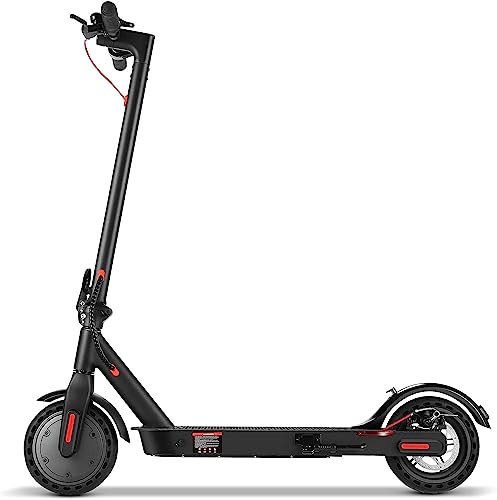
Hiboy lists up to 40 miles of range under optimal conditions, a 19 mph top speed, a 40 lb weight and a 220 lb maximum load. An entry-level option with no suspension.
The S2 Max trades suspension, a higher water rating and a higher load limit for a lower price tier. Hiboy lists IPX4 and a 220 lb maximum load, so it suits lighter riders on dry days and smooth routes. See the Hiboy S2 Max profile for the full figures.
A Short Checklist Before You Buy
- Your round trip is under half the range listed for the speed you will ride.
- Your weight, with a bag, is under the maker’s maximum load.
- You can lift or roll the scooter where it will live.
- The water rating fits your climate, and you have a rain plan.
- You have a real lock and a place to use it.
- You know your state and city rules, and your building’s charging rule.
Sources
- Cornell Environmental Health and Safety: Fire Safety with Lithium-ion Mobility Devices
- Segway MAX G3 Plus official product page
- Segway Ninebot KickScooter Max G2 official product page
- Segway Ninebot Max G3 official product page
- Segway Ninebot E2 Plus official product page
- NIU KQi Air official product page
- Hiboy S2 Max official product page
Frequently asked questions
How far can I commute on an electric scooter?
Treat the maker's range as a ceiling. Segway lists about 56 miles for the Max G3 Plus in ECO mode, but that figure assumes about 9.3 mph, a 165 lb rider, 77°F and flat pavement. At 28 mph in SPORT+ the same scooter is listed at about 22 miles. A safe rule is to keep your round trip under half of the range listed for the speed you really ride.
Can I ride an electric scooter in the rain?
Check the scooter's IP rating and the manual. Segway lists IPX6 for the Max G3 Plus body, IPX5 for the Max G2, NIU lists IP55 for the KQi Air and Hiboy lists IPX4 for the S2 Max. Those ratings describe splashes and spray, not puddles or submersion, and wet pavement still lengthens braking distance. Slow down and avoid standing water.
Is it legal to ride an electric scooter to work?
There is no single federal e-scooter law. States and cities set speed limits, minimum ages, helmet rules and where you may ride, including sidewalks and bike lanes. Look up your state first and then your city, because the city rule can be stricter. Segway itself notes that some states cap scooter speed.
Can I take an electric scooter on the bus or train?
That is up to the transit agency, so read its policy before you buy. Weight matters either way: the NIU KQi Air is listed at about 26.2 lb and folds to about 18.9 inches tall, while the Segway Max G3 Plus is about 56 lb. If you must carry the scooter up stairs, weight should drive your choice.
Is it safe to charge a scooter battery at my desk or in my apartment?
Follow the building's rules first. Cornell's environmental health and safety office advises using the original charger, never charging while you sleep or leave the device unattended, and storing it where it does not block your way out. It also points to the UL 2272 standard as the mark to look for.
What should I look for in a commuter scooter besides range?
Weight if you carry it, brakes and tires you can maintain, lights and turn signals, a water rating that fits your climate, and a clear charging plan. Also check the maker's maximum load and recommended rider height and age against your own.